Mobile Tracked Screeners: Separate material by size on the job site


If you've spent any time on a job site, you've probably seen tracked screeners sitting next to a pile of dirt or crushed concrete, separating material while everything else keeps moving. They're not complicated machines, but the right one at the right time changes how a job gets done.
Here's what you actually need to know.
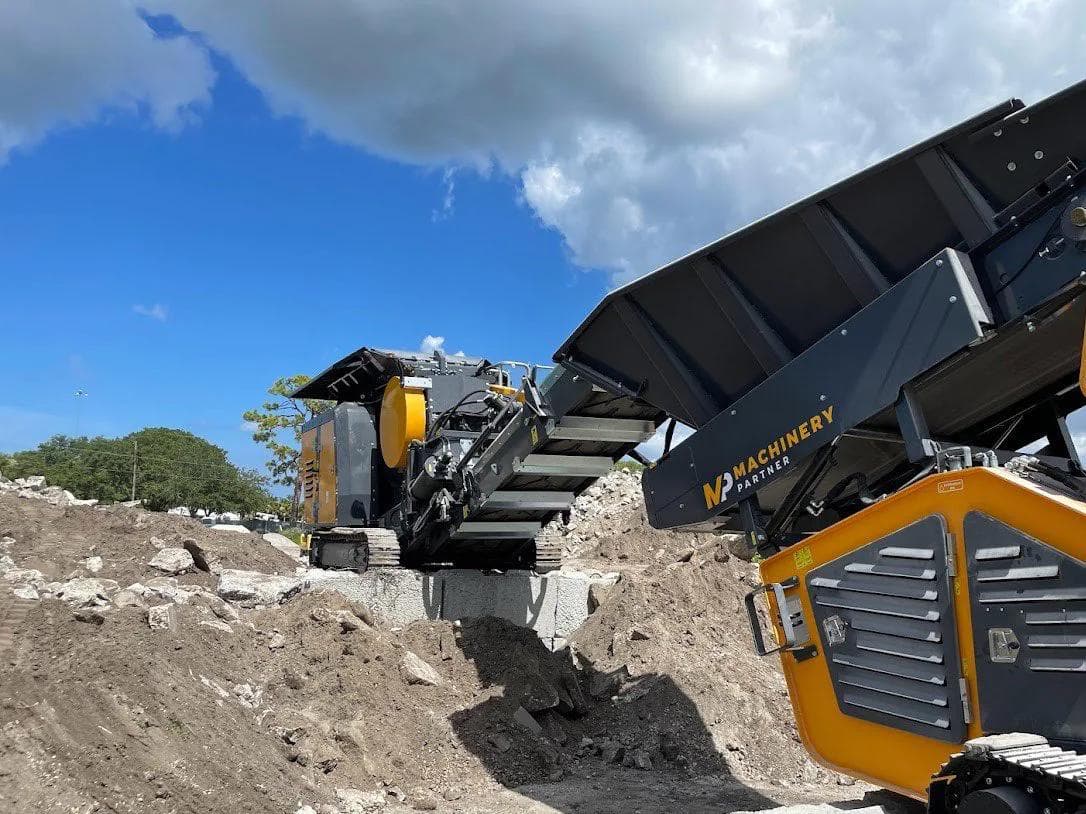
What Is a Tracked Screener?
A tracked screener is a mobile screening machine that runs on crawler tracks. It separates bulk material like soil, aggregate, concrete, asphalt, demolition waste into different size fractions on the job site, without any fixed infrastructure.
Unlike a stationary screening plant, a tracked screener goes where the work is. It can cross rough terrain, reposition as stockpiles shift, and get fed directly by an excavator or loader. Setup is fast. Downtime from transportation is minimal and that mobility is one of the most important considerations for contractors.
What Does a Tracked Screener Actually Do?
Material gets fed into the hopper by excavator, wheel loader, or conveyor and passes over a vibrating screen deck or trommel drum. Fines fall through. Oversized material discharges separately. What comes out the other end is sorted, consistent, and ready to use, resell, or process further.
Most tracked screeners run two or three screen decks, giving you two or three grades of output from a single pass, providing an inventory of sellable product compared to a mixed pile.
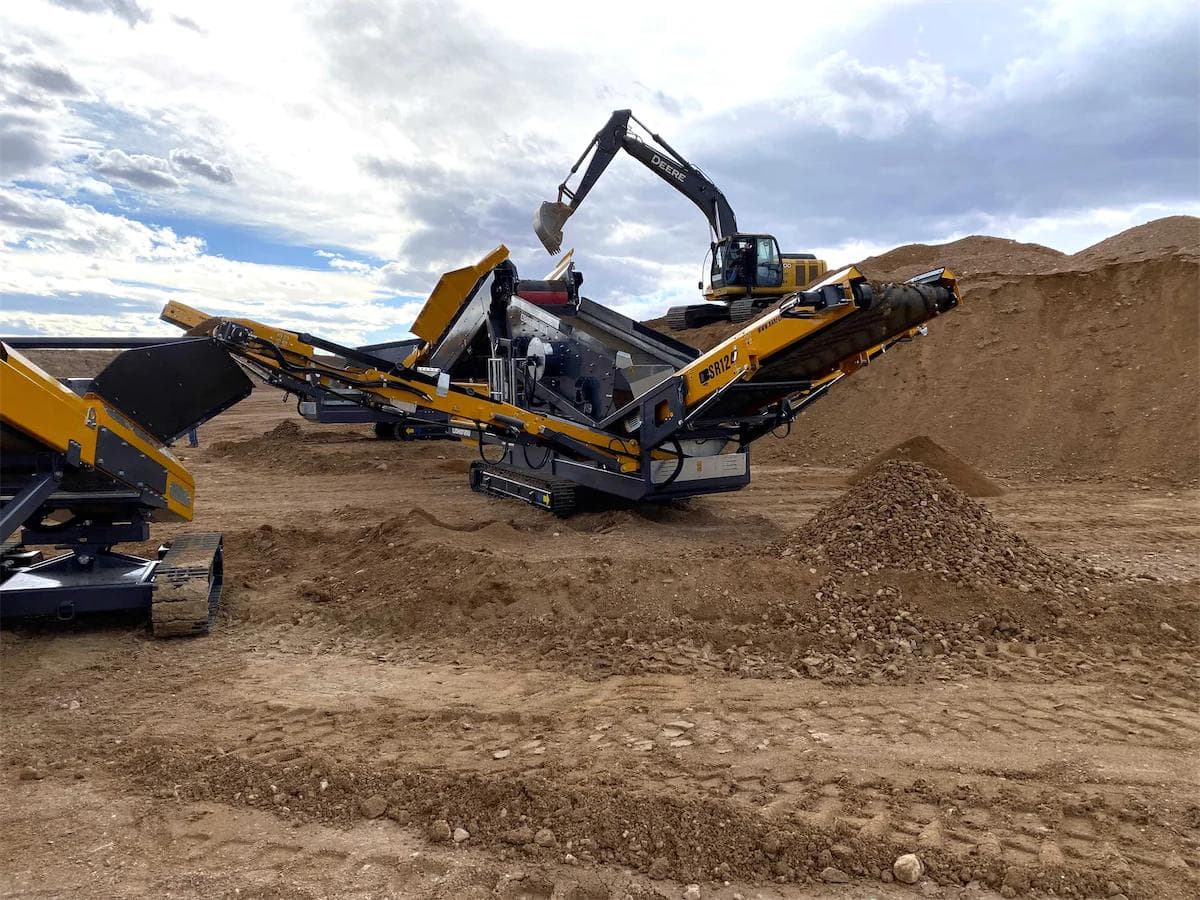
Who Uses Tracked Screeners?
The short answer: anyone processing bulk material in the field.
Aggregate producers and contract crushers use tracked screeners to hit DOT spec without hauling material back to a fixed plant. Run the crusher, run the screener, and stockpile finished product all in one pass.
Civil and infrastructure contractors screen excavated material during site prep and road building. A screener can turn cut material into usable base layer, which is a lot cheaper than importing fill.
Demolition and C&D recycling operations use them to pull value out of concrete, brick, and mixed debris. Crushed concrete that gets screened to spec can be sold or reused on site. Without screening, it goes to landfill.
Land clearing and environmental contractors process soil, compost, wood chip, and organic material. A screener is what turns a pile of mixed debris into a finished mulch or topsoil product.
Haulers and transport companies are increasingly adding screeners alongside crushers. It lets them process material on site instead of just moving it, which means they get paid for the material, not just the truck.
When To Consider a Tracked Screener
The economics are straightforward.
Every load of raw material you screen yourself is a load you didn't pay someone else to process. Every ton of sellable product you produce is revenue that didn't exist before. Every ton you divert from disposal is a tipping fee you didn't pay.
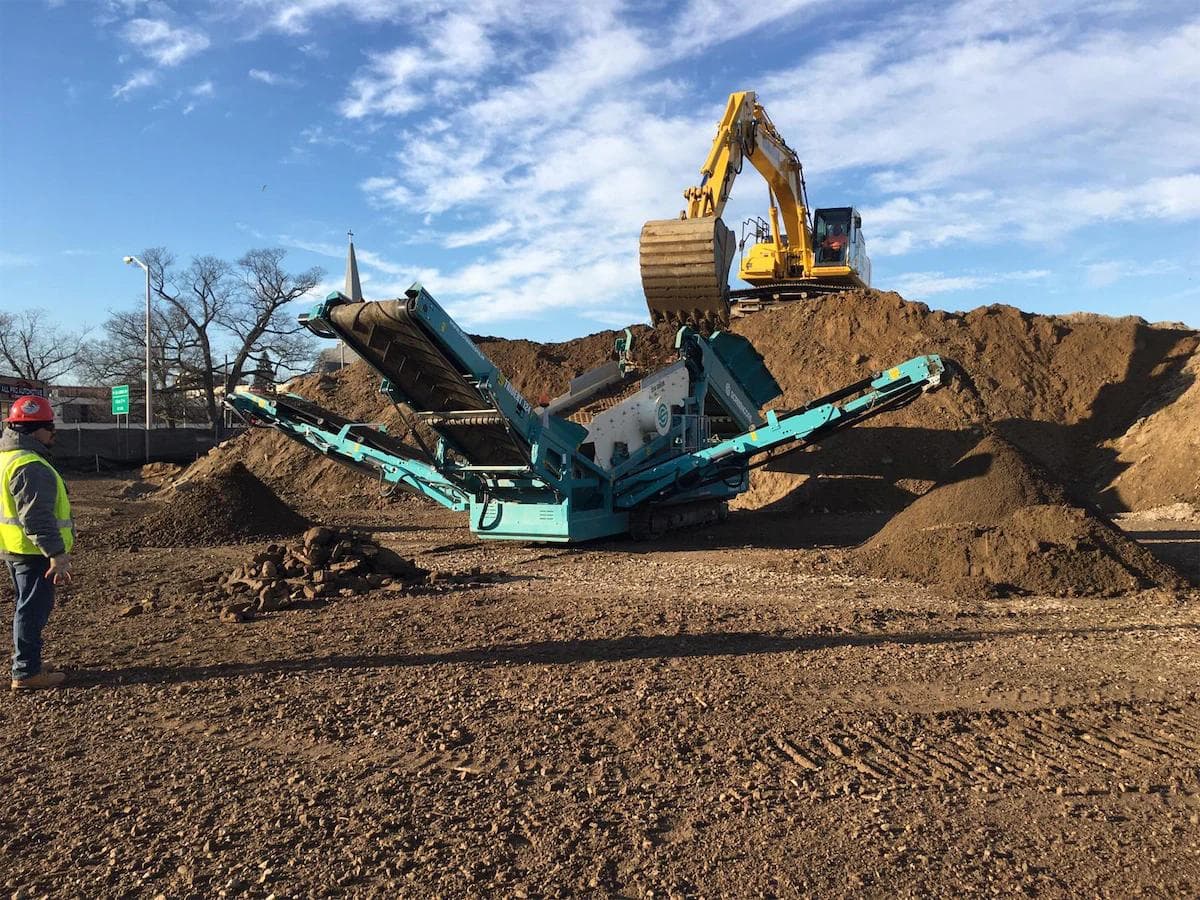
That math adds up fast especially on larger sites where material volumes are significant and trucking costs are high.
For a lot of contractors, the moment they run the numbers is the moment they stop thinking of a screener as a cost and start treating it like a revenue line.
Tracked Screener Options in the Market
Different machines exist for different operations. Here's a quick look at a few brands that get rave reviews from our customers:
Barford builds compact, practical screeners suited for contractors working across multiple sites. They're reliable, easy to move, and well-matched for topsoil, aggregate, and recycling work at small to mid-scale volume.
RubbleCrusher is built for contractors running smaller volumes of concrete and demolition material. Often paired with their compact crushers for a complete mobile processing setup.
Terex EvoQuip screeners handle higher throughput and tougher material types. A good fit for contractors who are scaling production or need a machine that can keep pace with a larger operation.
Screen Titan machines are built around portability. They move between sites efficiently and perform well in soil, compost, and aggregate applications where transport logistics matter as much as output.
How to Pick the Right Machine
Don't start with horsepower or deck size. Start with the material.
Wet, clay-heavy soil is a completely different screening challenge than dry aggregate or crushed concrete. What works for one doesn't necessarily work for the other.
Then think about volume. A contractor running occasional loads doesn't need the same machine as someone running continuous production. Oversizing a machine means carrying costs that don't match the work.
Finally, consider how often the machine needs to move and how it'll get there. Compact machines give up some throughput but make up for it in transport flexibility. Larger machines produce more but need more logistics.
The best screener is the one that fits how you actually work, not the one with the most impressive spec sheet.
Frequently Asked Questions
What materials can a tracked screener handle? Soil, topsoil, aggregate, crushed concrete, asphalt, C&D debris, compost, woodchip, and other bulk material. Some machines handle wet or clay-heavy material better than others.
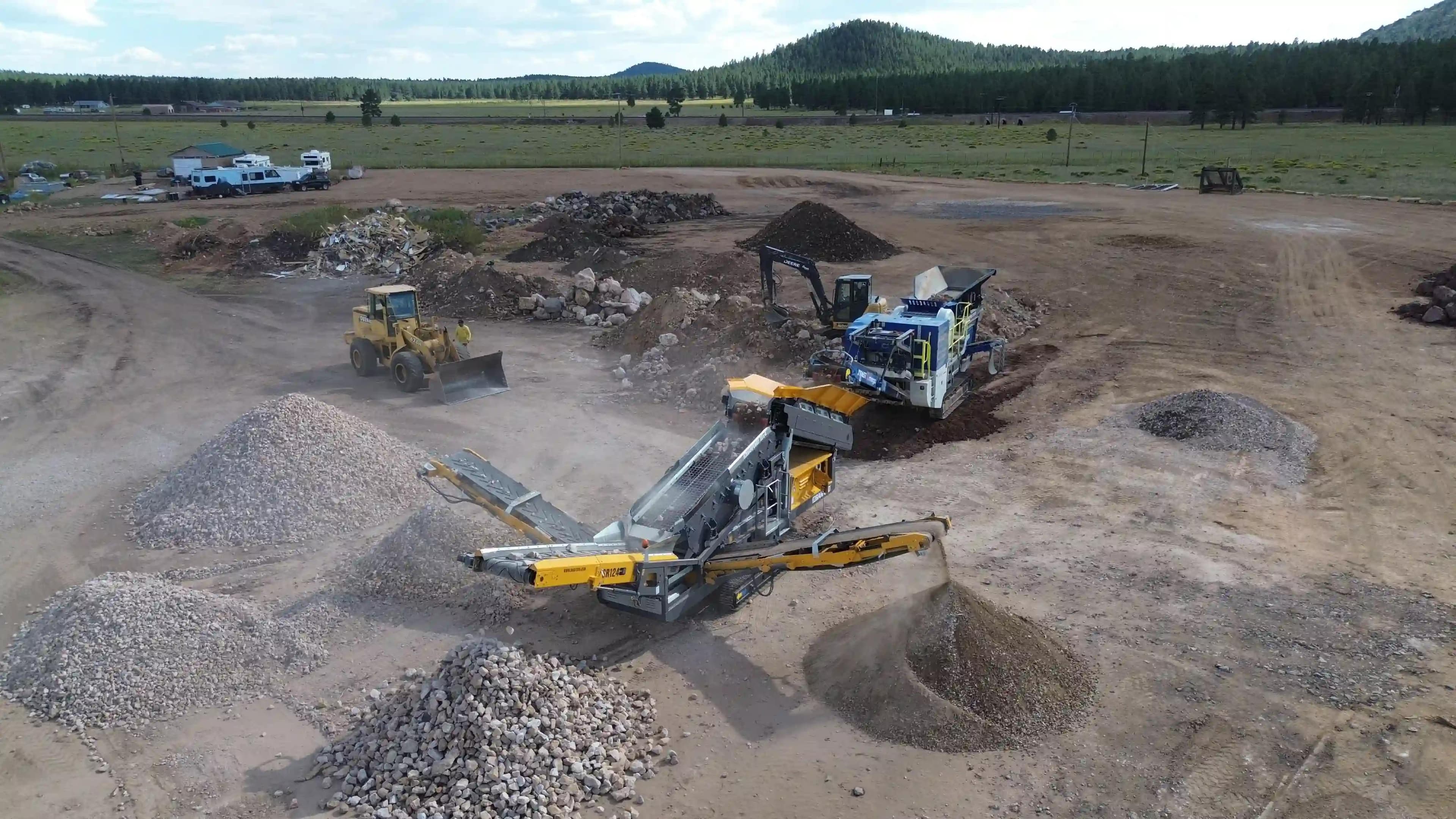
Can you run a tracked screener with a crusher? Yes, and many operations do. A crusher reduces oversize material; a screener grades the output. Together they form a complete mobile processing circuit.
How much does a tracked screener produce per hour? Production rates depend on the machine size, screen deck configuration, and material type. Entry-level machines typically run in the range of 50–100 TPH. Larger machines can go significantly higher.
Is a tracked screener worth it for smaller operations? It depends on volume and material value. For contractors regularly processing material they're currently hauling off or purchasing back in finished form, the payback period is often shorter than expected.
What's the advantage over a stationary screening plant? No civil works, no fixed infrastructure, no hauling to and from a central facility. You screen where the material is — which saves time, reduces double handling, and keeps the project moving.