Trommel vs. Flat Deck Screener: Which One Is Right for Your Operation?


Screening equipment is one of the most versatile categories in aggregates and recycling -- and one of the most misunderstood. Contractors and producers often treat trommels and flat deck screeners as interchangeable. They are not.
The machine that works perfectly on a composting site can choke on a dry aggregate stockpile. The one that handles crushed stone at 300 tons per hour can clog on wet, sticky soil before lunch.
Choosing wrong costs you downtime, reduced output, and a machine that never performs the way the spec sheet suggested. This guide walks you through how each type works, where each excels, and how to match the right screener to your material.
How Trommels Work
A trommel screener uses a rotating cylindrical drum -- typically a steel mesh -- that tumbles material as it moves through. Fines fall through the mesh while oversized material exits from the far end.
The tumbling action is the key. It breaks up clumps, separates sticky or wet material, and keeps the screening surface from blinding (clogging). That is why trommels are the dominant choice in:
- Compost and green waste processing
- Topsoil screening with high clay content
- Mulch and wood waste operations
- Landfill and waste management applications
- C&D debris with mixed organic content
Trommel screens come in tracked mobile versions, like the Barford T620 and the Gremac E2, that can move around the site and feed directly into windrows or piles. Both are built for high-throughput organic and recycling applications where material tends to be wet and variable.
How Flat Deck Screeners Work
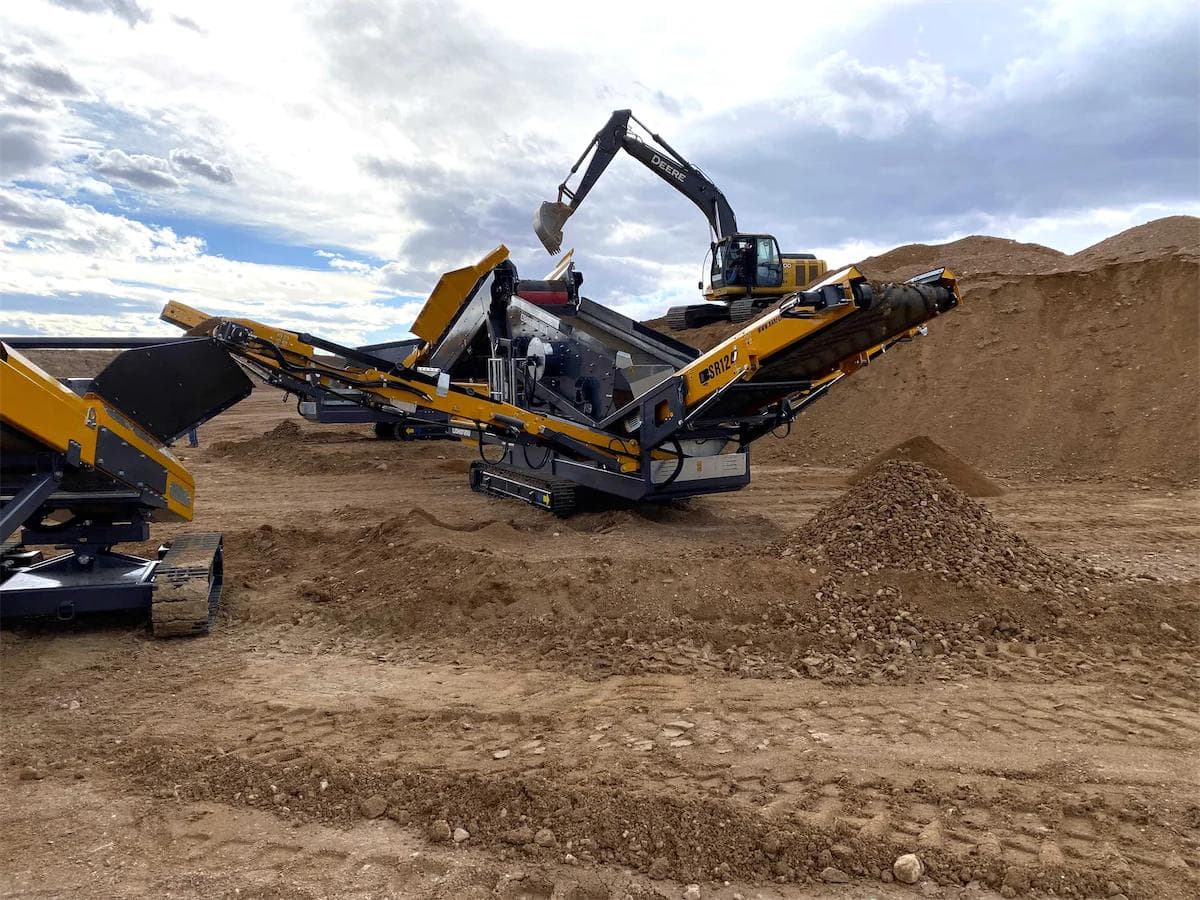
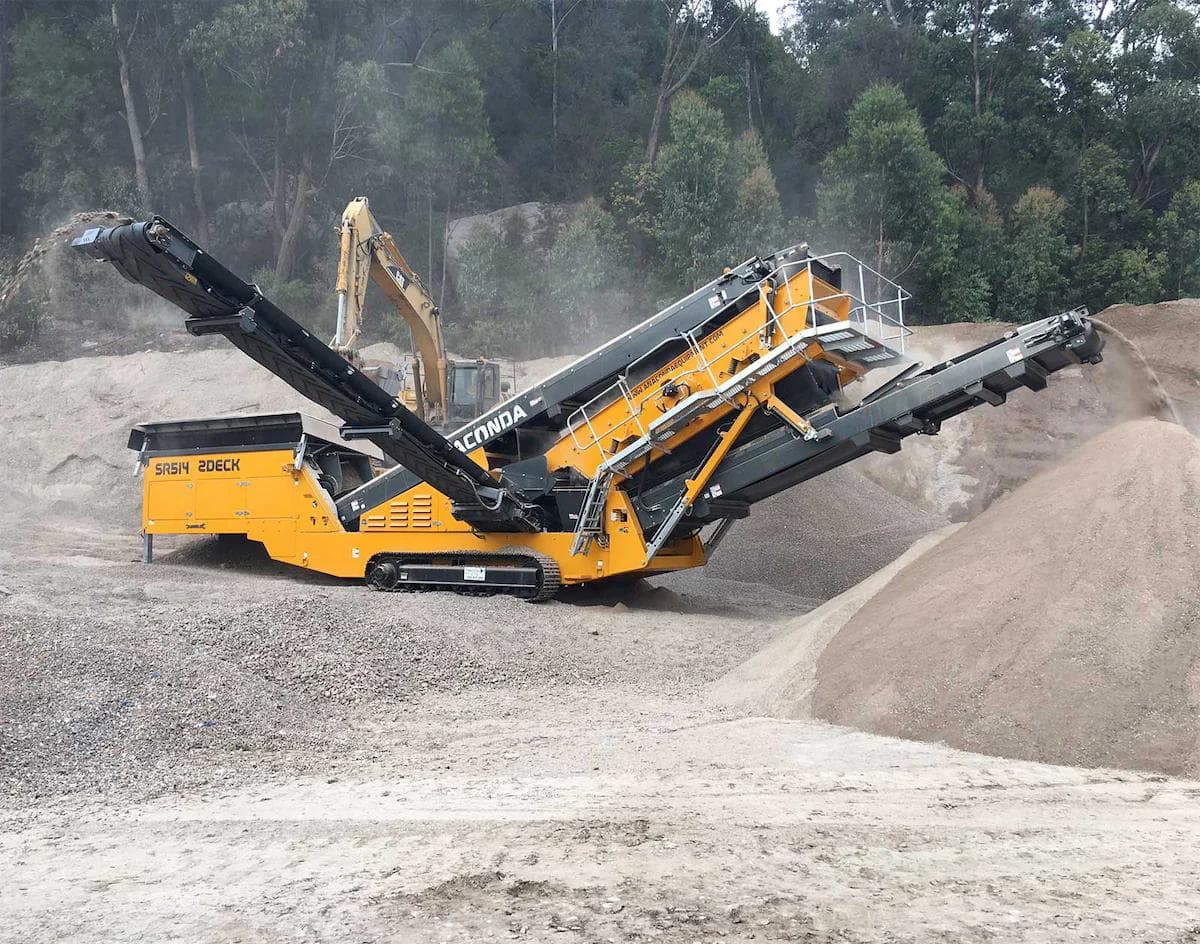
Flat deck screeners (also called scalpers or vibrating screens) use one or more vibrating wire or polyurethane mesh decks to classify material by size. The vibration moves material across the deck while sized material drops through each level.
Because the material moves across a flat surface rather than tumbling, flat deck screeners are faster and more accurate at classifying dry, free-flowing material. They are the standard choice for:
- Crushed aggregate and quarry material
- Recycled concrete and asphalt
- Sand and gravel separation
- Construction fill screening
- Multi-fraction material classification (2-way or 3-way splits)

The Barford SR124 scalper and the Screen Titan ST Ultra are purpose-built for aggregate and demolition recycling applications, where throughput, accuracy, and reliability under load are the primary requirements. The RCS48T goes further with a 3-way split, which means one machine can produce three distinct product sizes in a single pass.
Trommel vs. Flat Deck: Side-by-Side Comparison
- Best material -- Trommel: wet, sticky, organic | Flat Deck: dry, free-flowing aggregate
- Blinding risk -- Trommel: low | Flat Deck: higher in wet conditions
- Accuracy -- Trommel: good for 1-2 fractions | Flat Deck: better for precise multi-fraction sizing
- Throughput -- Trommel: high on organic material | Flat Deck: high on aggregate
- Maintenance -- Trommel: drum mesh replacement | Flat Deck: deck panel replacement
- Typical use -- Trommel: compost, topsoil, waste | Flat Deck: crushed stone, C&D, sand
Neither machine type is categorically better. The right answer depends entirely on what you are screening.
The Material Test: What Are You Actually Screening?
Before you compare machine specs, answer these three questions:
- What is the moisture content? If your material is regularly above 15-20% moisture, a trommel is almost always the better call. Flat decks blind quickly in those conditions, and your throughput drops faster than the spec sheet will warn you.
- How many product fractions do you need? If you need a single pass to produce 0-10mm, 10-40mm, and 40mm+ separately, a 3-way flat deck like the RCS48T is hard to beat. Trommels typically produce two fractions cleanly and require additional equipment to classify further.
- What does your feed material look like? Chunky, irregular, clumping material -- think green waste, topsoil with roots, mixed C&D -- favors the trommel's tumbling action. Consistent, angular, crushed material plays to the flat deck's strengths.
Operating Cost Differences to Know
Both machine types have similar capital costs at comparable capacities. Where they diverge is in day-to-day operating expense.
Trommel drum meshes last longer on organic material but wear faster on abrasive rock or concrete. If you run a trommel on high-silica aggregate consistently, expect significantly shorter mesh life than the manufacturer benchmarks, which are typically calculated on compost or topsoil.
Flat deck panels -- whether wire mesh or polyurethane -- need more frequent attention in wet, sticky applications because they require manual cleaning or the machine loses efficiency. In dry aggregate applications, polyurethane panels can run for months without intervention.
The takeaway: run each machine in the material it was designed for and operating costs stay predictable. Fight the material, and maintenance costs climb fast.
Which Brands Should You Consider?
For trommel applications, Barford and Gremac are two of the most established names in the market. The Barford T620 is a high-capacity tracked trommel that handles compost, topsoil, and organic recycling at scale. The Gremac E2 is a compact tracked trommel built for tighter sites and smaller throughput requirements.
For flat deck and scalper applications, Barford's SR series scalpers and the Screen Titan ST Ultra are proven performers in aggregate and recycling environments. The Screen Titan in particular is built for high-abrasion applications and is a strong option if you are running crushed concrete or hard rock consistently.
If you need 3-way classification in a single mobile unit, the RCS48T is worth a close look. It handles scalping and multi-fraction classification without requiring additional equipment downstream.
Talk to a Screening Specialist
Still not sure which direction to go? The right answer depends on your material, your site, and your target output -- and it is worth getting that conversation right before you commit.
Machinery Partner's team can walk you through the options, run the numbers on throughput and operating cost for your specific application, and help you get to the right machine faster.