How to Find the Right Conveyor for Your Construction Project’s Needs

When it comes to construction, compost production, or any material-handling task, a conveyor system can make or break your efficiency. Picking the right conveyor is like assembling the perfect toolkit for a job. Each conveyor type has its strengths, and aligning the right one with your project’s needs ensures peak performance, saved time, and reduced costs.
Whether you're a contractor, construction manager, or heavy equipment owner, this guide is your go-to resource for understanding how to select the best conveyor for your project.
Why Use an Industrial Conveyor in Your Construction Project?
Conveyors streamline the process of moving materials efficiently, reducing reliance on manual labor and providing a safer work environment. From transferring soil or aggregates on job sites to neatly stacking compost, conveyors increase productivity while minimizing costs.
Here’s why you should integrate an industrial conveyor into your project setup:
- Speed & Efficiency: Conveyors can move tons of material quickly.
- Reduced Labor and Equipment Costs: They minimize manual handling requirements.
- Improved Safety: Fewer workers in hazardous zones.
- Precision: Ideal for material transfer without spills or losses.
How to Choose the Right Conveyor System?
Choosing the right conveyor system is all about finding the perfect balance between functionality and efficiency for your project. Start by clearly defining your project goals and the tasks the conveyor will need to perform. Identify critical parameters like throughput requirements, site limitations, and material characteristics. Next, consult with industry specialists who can help match your needs with the right equipment features, such as adjustable height, belt speed, or modular designs for future scalability. Testing your chosen conveyor in real-world conditions, if possible, is also a smart move to ensure it lives up to expectations. A well-chosen conveyor system will not only meet your operational needs but also save time, reduce labor costs, and enhance overall project productivity.
What Factors Would You Take into Consideration When Selecting a Conveyor or Stacker?
Selecting the right conveyor begins with understanding the unique requirements of your project. Key factors include the type and volume of materials you’ll be handling, as this determines the conveyor’s size, capacity, and belt type. The working environment is another critical consideration, whether it’s indoors, outdoors, in dusty conditions, or on an uneven site - since it influences the design and durability of the system. Additionally, take into account the conveyor’s mobility needs. Should it stay fixed in one location or be portable? Other factors like power source availability, budget, and the desired level of automation also play a vital role in narrowing down your options.
1. Quantity of Material
The volume of material you need to move per hour affects the size and type of conveyor you should choose. For lightweight materials or a smaller volume, a standard conveyor works well. Heavier loads or higher volumes require robust systems like radial stackers or long-track conveyors.
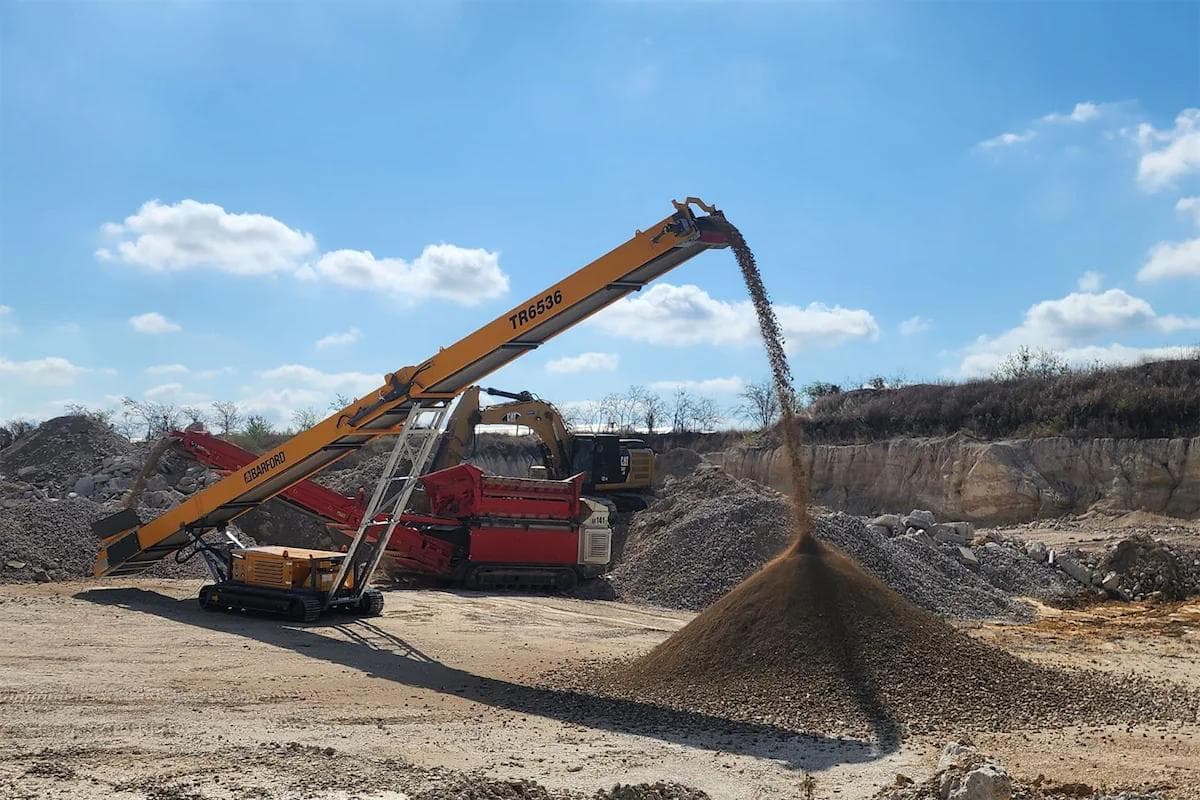
- Example: If moving over 700 tons/hour, choose a wider belt conveyor like the Barford TR8048, which handles bulkier, heavier materials effectively. For smaller loads, a shorter conveyor such as the Barford TR6536 could be sufficient.
2. Material Characteristics
Consider the physical properties of the materials you’ll be handling because knowing your material’s characteristics up front cam help to avoid downtime and costly repairs.
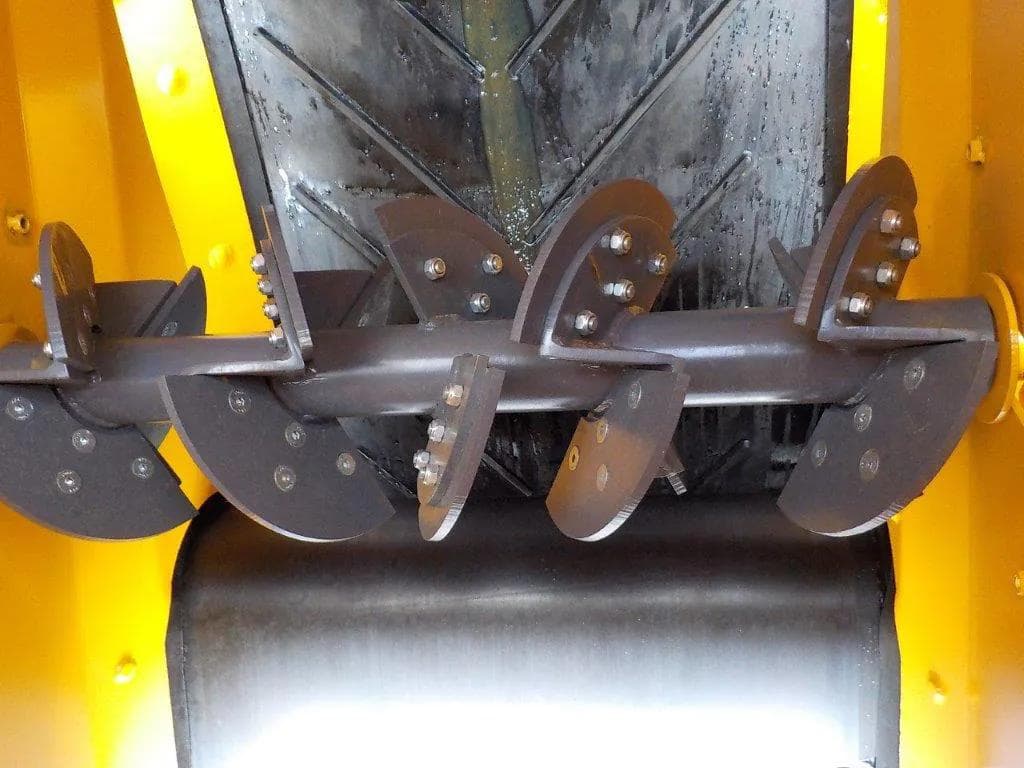
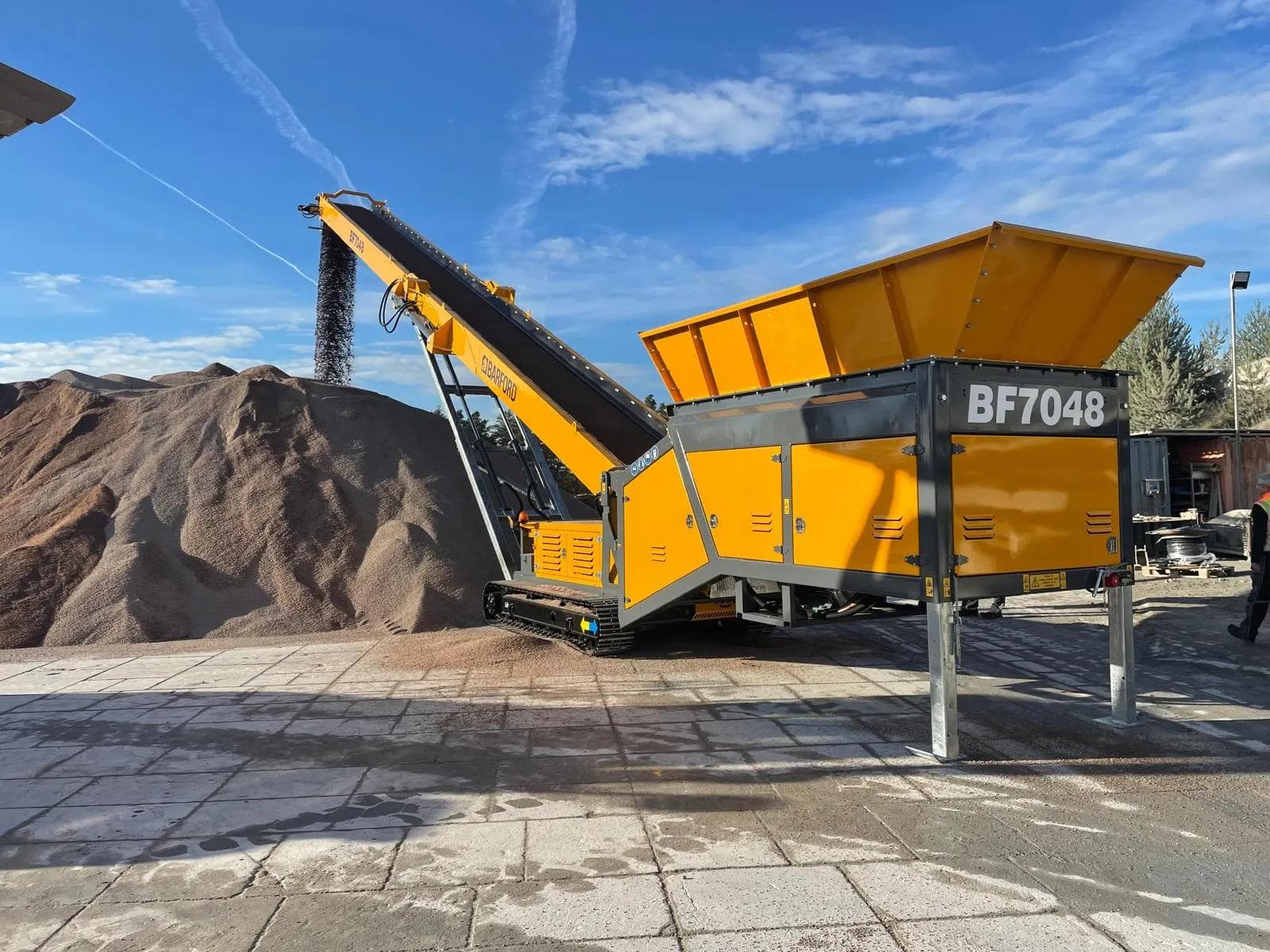
- Density and Size: Wet and sticky materials like compost often require special augers for example, the Barford BF7048 Bin Feeder, which is capable of aerating and mixing.
- Moisture Levels: For wet or sticky materials, select conveyors equipped with advanced belt cleaners or specialty belts to reduce material cling.
- Abrasiveness: Conveyors for highly abrasive substances benefit from wear-resistant belts to minimize damage.
3. Distance and Route
Determine the length of the conveyor and any specific route challenges.
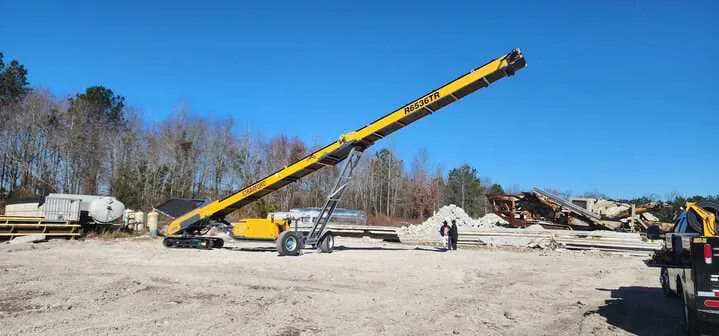
- Straight vs. Curved Paths: If the conveyor must curve or change elevation, specialized transfer and incline conveyors ensure smooth material movement. Radial conveyors like the Barford R6536TR Radial Conveyor are ideal for outdoor worksites where space and movement flexibility are key.
- Increasing Distance: Long conveyors or telescopic models reduce the need for multiple machines, cutting costs and simplifying logistics.
4. Environmental Conditions
Often overlooked, your work environment plays a big role in choosing the right conveyor:
- Weather Tolerance: Outdoor conveyors exposed to rain, snow, or heat may need weatherproof finishes and durable covers.
- Contamination Risks: Dusty or oily environments could damage standard conveyors unless appropriate materials and designs are used. For instance, conveyors transporting metal shavings should prevent residual oil buildup that could lead to malfunctions.
5. Washdown Requirements
For applications requiring frequent clean-ups, such as food-grade material handling or wet environments, stainless-steel conveyors with washdown configurations are essential.
- High-pressure cleaning compatibility ensures durability and hygiene in sensitive industries, while resistant materials prolong your equipment’s lifespan.
6. Product Transfer Requirements
Think about how materials will transfer from one machine to another within the conveyor system:
- Smooth Transfers: For transferring large, uniform materials (e.g., from a crusher to a screener), side-to-side transfers may not be necessary. A simple end-to-end connection could suffice to maintain a consistent flow.
- Precision Handling: When transferring smaller or delicate materials between machines, powered transfer plates or rollers are crucial to avoid jams or damage. These ensure controlled movement and accurate placement onto the next machine's intake.
Make sure the conveyor's transfer systems are compatible with the dimensions and throughput requirements of both the source and destination machines.
Comparing Conveyor Types
Understanding your project specifics is just the start. Here’s a comparison of conveyor options and their ideal applications to help you pick the best one.
1. Best for Compost and Mulch - Bin Feeders - Barford BF7048
The Barford BF7048 Bin Feeder is a versatile and robust conveyor system designed to optimize material handling in various industrial settings. Its standout feature is the ability to be flood-loaded directly into the hopper, increasing efficiency and reducing downtime associated with manual loading.
Furthermore, the BF7048 is equipped with a powerful auger mechanism integrated into the hopper. This auger serves the dual purpose of mulching and mixing the material as it is fed into the conveyor. This ensures a consistent and homogenous flow of material, which is crucial for downstream processes that require uniform input. The mulching action also helps break down larger clumps or aggregates, preventing blockages and ensuring smooth operation.
- Best For: Compost producers or aggregate industries.
- Key Features: Integrated auger for mixing and aeration.
- Why Use It? Its dual function of moving and treating materials makes it indispensable for compost or granular material workflows.
2. Best for Making Use of Space - Radial Conveyors - Barford R6536TR
Radial Stackers are an ideal solution for efficiently creating stockpiles at construction sites or quarries. With their adjustable pivot range, they can produce kidney-shaped stockpiles while offering exceptional mobility and high transfer capacity. If your project demands elevated stack heights or frequent on-the-go adjustments, radial stackers are the perfect choice.
The Barford R6536TR Radial Conveyor takes stockpiling to the next level. As a tracked radial stockpiler, it rotates to form a circular bank of stockpiles around the machine, maximizing storage capacity without the need to reposition the conveyor manually. This saves both time and effort, ensuring streamlined operations. The R6536TR is designed for flexibility, allowing seamless transitions between tracking and radial modes for fast, hassle-free setup on-site. Its impressive stockpiling capacity and mobility enable quick material relocation, eliminating the need for excessive loader use.
Additionally, the machine's low feed height lets it fit easily beneath crushers or screeners, enabling direct material stockpiling. With the R6536TR, you can enhance efficiency and productivity, making it a valuable asset for any stockpiling job.
- Best For: Creating stockpiles efficiently at construction sites or quarries.
- Key Features: Adjustable pivot range for kidney-shaped stockpiles and high transfer capacity combined with mobility.
- Why Choose Radial? Perfect for projects requiring high stack heights or on-the-go adjustments.
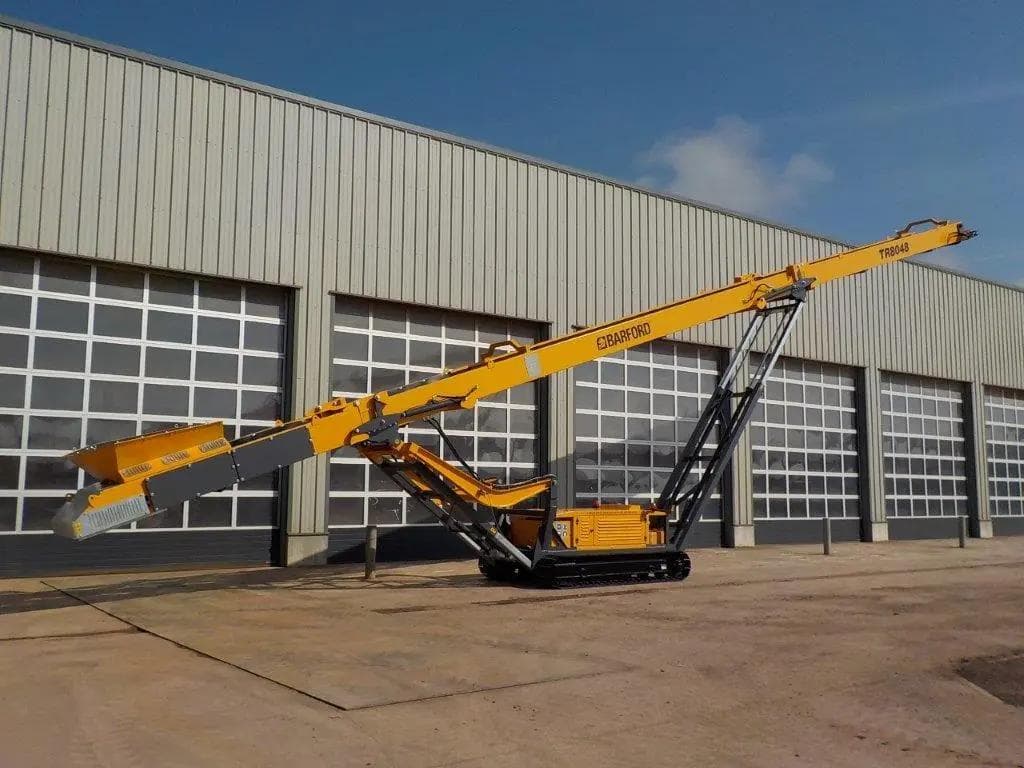
3. Best for Making Large Stockpiles - Long Conveyors - Barford TR8036 and TR8048
For large-scale material transfer and high-capacity needs, Long Conveyors such as the Barford TR8036 and Barford TR8048 are the ideal solution. The TR8048 is perfect for spanning long distances and can handle bulkier loads with ease, reducing the need for equipment shuttling.
- Best For: Large-scale material transfer and high-capacity needs.
- Key Features: Options for wider belts (TR8048 handles bulkier loads with ease).
- Ideal Scenario: Spanning long distances, reducing equipment shuttling.
4. Best Budget Compact Conveyors - Portable Stackers
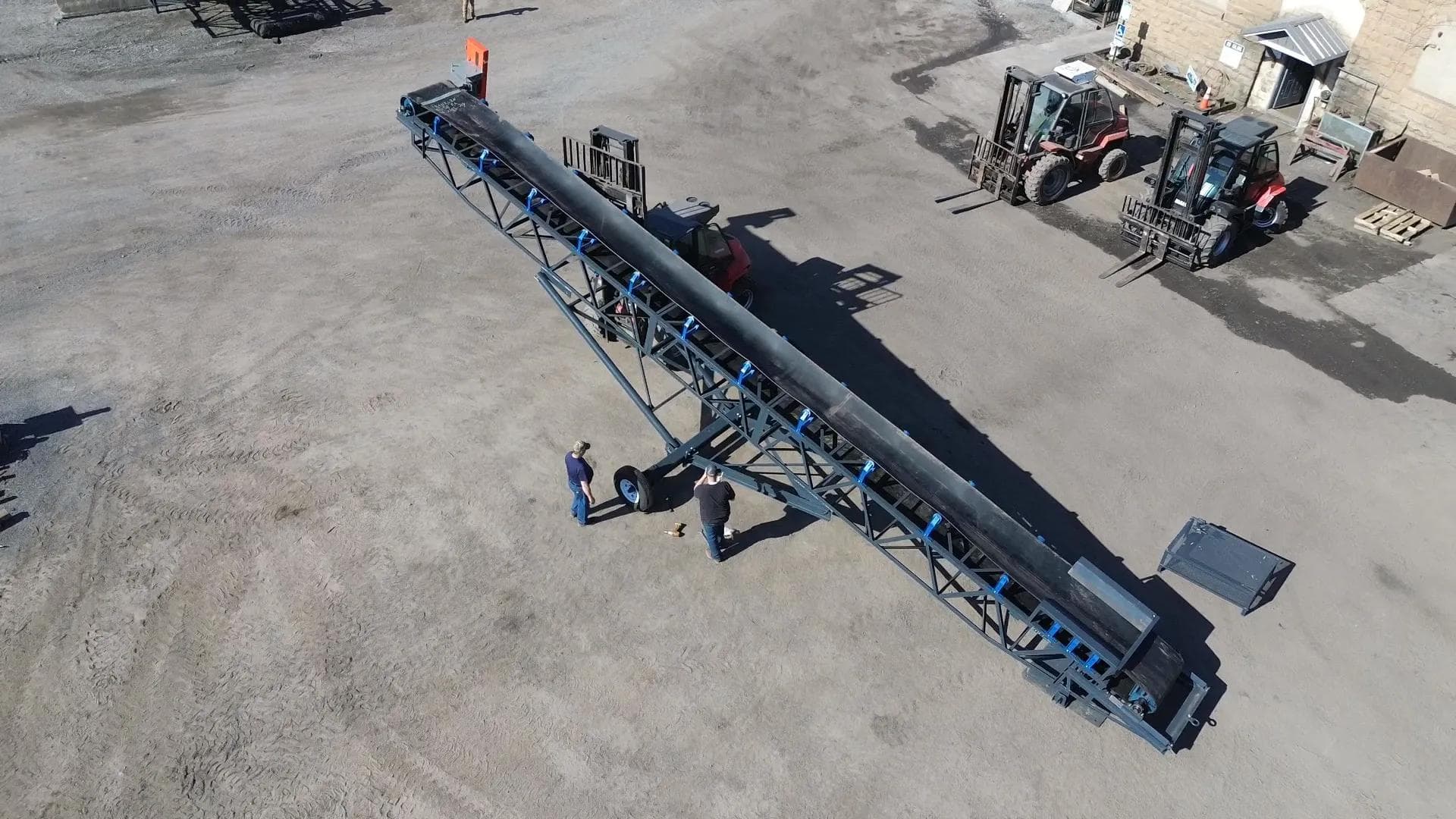
Portable Stackers are the best budget compact conveyors. They have a semi-static, cost-effective design that is perfect for entry-level jobs that don't require frequent relocation. While they are less agile than fully tracked conveyors, they are a great option for those on a smaller budget.
- Best For: Smaller budgets with less demand for mobility.
- Key Features: Semi-static yet cost-effective design that works for entry-level jobs not needing frequent relocations.
- Trade-off: Less agile than fully tracked conveyors but highly economical.
5. Best All Round - Portable Tracked Conveyors - Barford TR6536
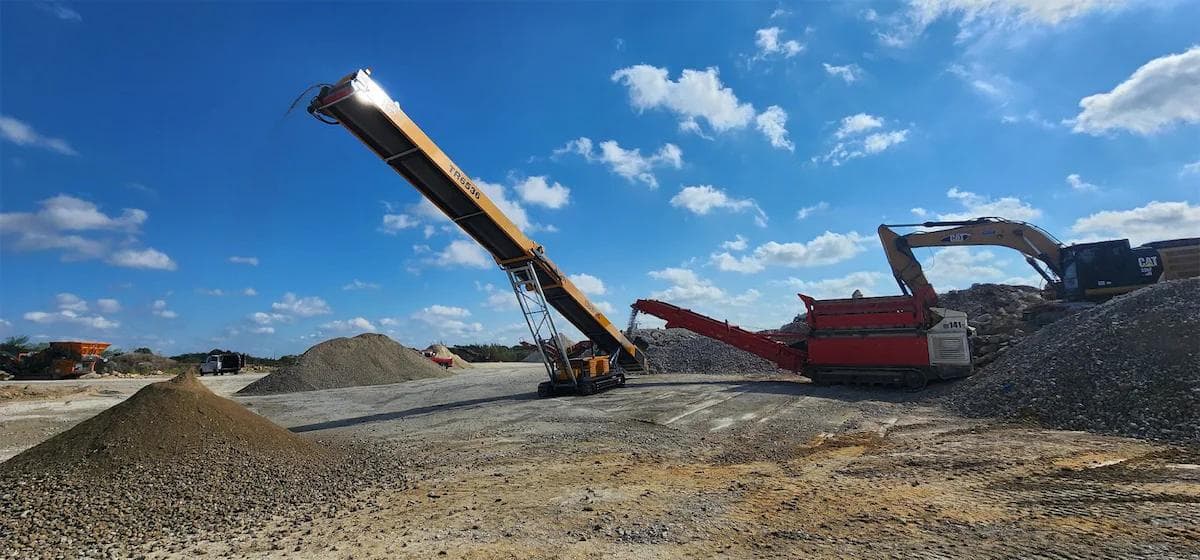
The Barford TR6536 conveyor is the perfect all-rounder for material handling on job sites. Its versatility makes it ideal for stockpiling, transporting materials, or seamlessly integrating into workflows after crushers or screeners. Designed for durability and efficiency, it can handle a wide range of tasks across construction and industrial projects, ensuring your operations run smoothly. Whether you need mobility, reliability, or a solution built to adapt to different needs, the TR6536 delivers it all.
- Best For: Projects needing maximum portability and efficient relocation.
- Why Choose It? Fully mobile solutions eliminate downtime when transitioning between locations across difficult terrain.
Why Consult a Conveyor Specialist?
The right conveyor system will transform the efficiency of your projects, making material handling faster, safer, and more economical. Be it a sprawling construction site, composting project, or quarry operation, choosing the perfect conveyor ensures seamless workflows and successful outcomes.
Consulting with a specialist helps. At Machinery Partner, our goal is to simplify decision-making by understanding your project needs and recommending solutions that are tailored to them.
Our industry experts will guide you through every step - from identifying capacity requirements to finalizing equipment specifications. Contact us now - 888-297-0623